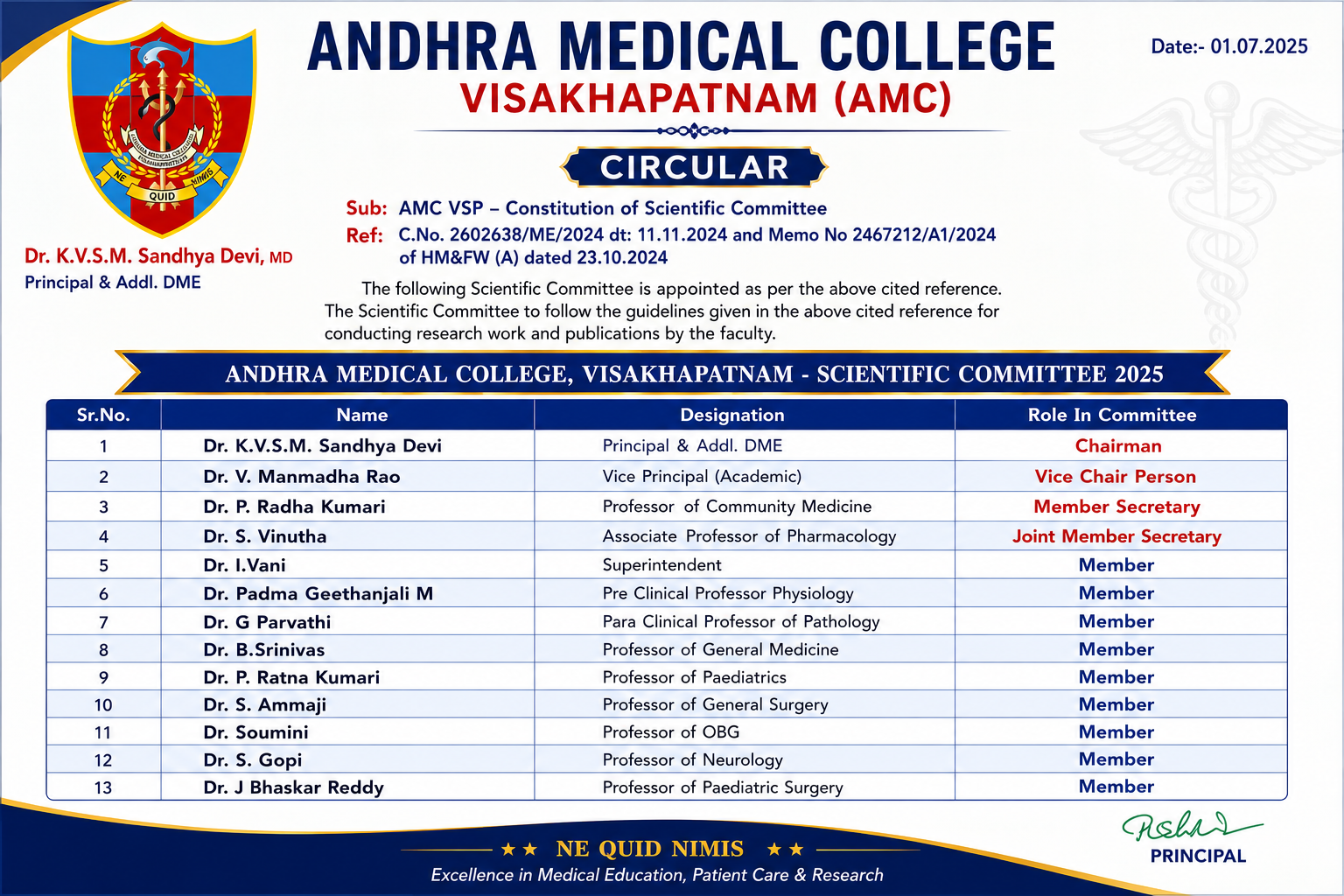
Scientific Committee
1️⃣ Oversight of Research Activities
-
Evaluate research proposals submitted by students, residents, and faculty.
-
Ensure that projects meet scientific rigor, ethical guidelines, and institutional policies.
-
Assess feasibility, methodology, and relevance of proposed studies.
2️⃣ Facilitate Ethical Approval Process
-
Coordinate with or refer proposals to the Institutional Ethics Committee (IEC) for ethical clearance.
-
Review the scientific merit of studies before they’re sent for ethical approval.
3️⃣ Promote a Research Culture
-
Encourage students and faculty to engage in clinical, biomedical, and community-based research.
-
Organize workshops, seminars, and training programs on research methodology, statistics, and scientific writing.
4️⃣ Scrutiny of Publications and Presentations
-
Review abstracts, manuscripts, and presentations before submission to conferences or journals.
-
Ensure quality, originality, and proper adherence to academic integrity.
5️⃣ Supervision of Conferences and CME Activities
-
Oversee the scientific content and agenda of Conferences, Continuing Medical Education (CME) programs, workshops, etc.
-
Approve guest speakers, topics, and program schedules to maintain academic standards.
6️⃣ Maintain Research Records and Reporting
-
Keep records of all ongoing and completed research within the institution.
-
Generate annual or periodic reports on research output and academic events for university or regulatory bodies.
7️⃣ Collaboration and Resource Facilitation
-
Facilitate inter-departmental and inter-institutional collaborations for research projects.
-
Help researchers access resources like labs, statistical services, and publication support.
📊 Example of a Typical Scientific Committee Composition:
-
Chairperson: Senior academic or Principal/Dean
-
Secretary: Faculty with research coordination responsibilities
-
Members: Representatives from clinical, non-clinical, and pre-clinical departments
-
External Expert(s) (occasionally for specialized reviews)