
CBME
UG Physiology Competencies
Access the Physiology competency document for undergraduate medical education.
View Competencies ↗


The recorded onset of medical education in Visakhapatnam can be traced to 1902, when the Victoria Diamond Jubilee Medical School was set up in the Old Post Office area supported byMaharajah Sir Goday Narayana Gajapathi Rao and Maharani Lady Goday Chitti janakiammah.



The recorded onset of medical education in Visakhapatnam can be traced to 1902, when the Victoria Diamond Jubilee Medical School was set up in the Old Post Office area supported byMaharajah Sir Goday Narayana Gajapathi Rao and Maharani Lady Goday Chitti janakiammah.
A dedicated academic resource centre for MBBS students. Access learning materials, curriculum documents, small group teaching resources and interactive self-assessment tools.
Browse the available Physiology learning resources. Use the search field or category filters to find a resource.
Access the Physiology competency document for undergraduate medical education.
View Competencies ↗View the departmental yearly academic plan and planned learning activities.
View Yearly Plan ↗Access the departmental SGT topics, session information and associated learning documents.
Explore SGT Sessions ↗Explore the AMC undergraduate curriculum and competency-based learning framework.
Explore CBME Curriculum ↗Open the supplementary Physiology learning material shared through Google Drive.
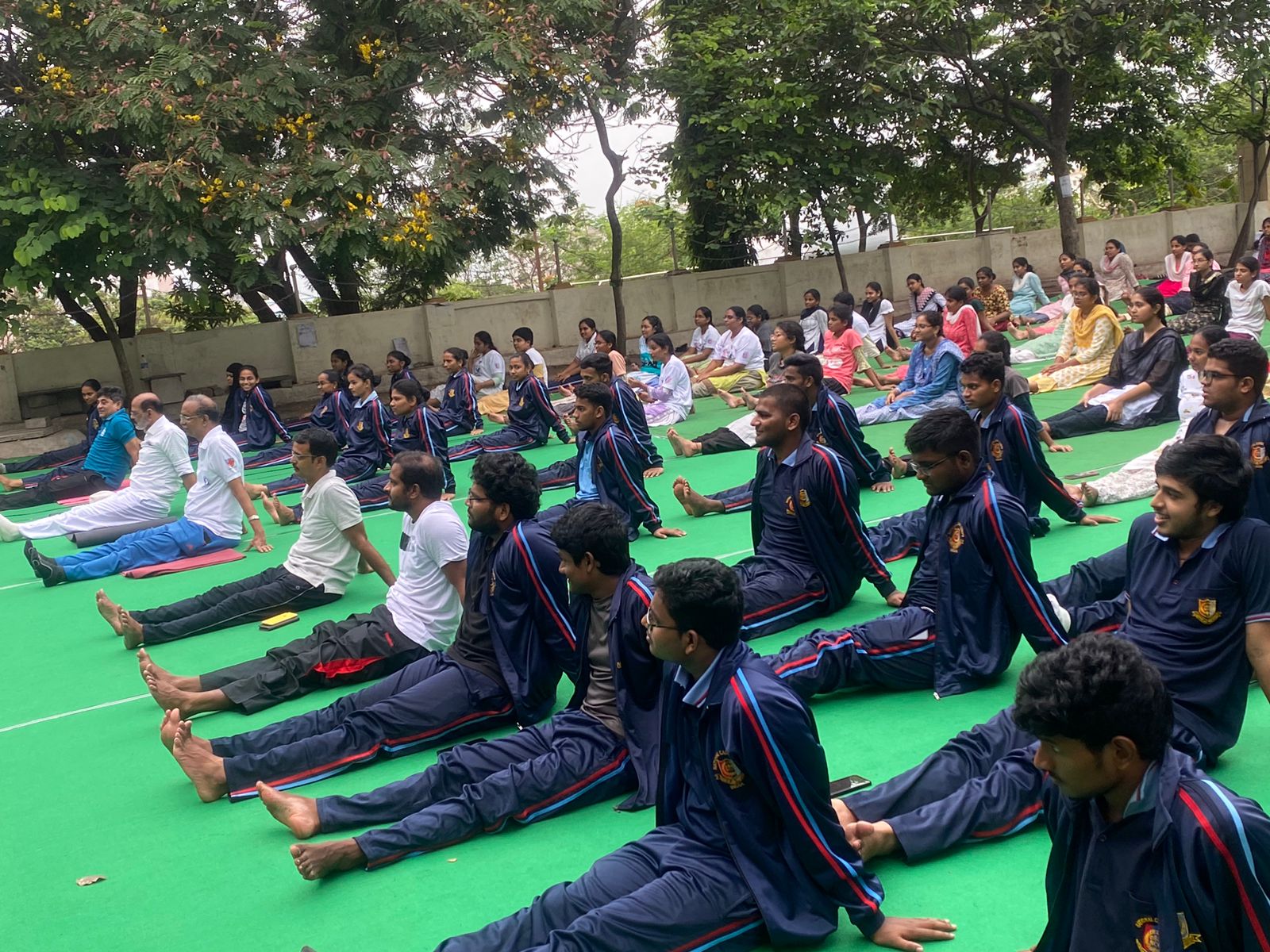
Open Learning Resource ↗Learn about the Yoga Unit functioning under the Department of Physiology at AMC.
Explore Yoga Unit ↗Explore the department, its academic activities, faculty and departmental information.
Visit Department Page ↗No matching resources found. Try a different search term.
Study the class material and reinforce your understanding through interactive MCQs.
Access the NMJ class PDF for guided study and use the interactive learning module to practise MCQs and assess your understanding of neuromuscular transmission.
Use the resources systematically to prepare, understand and assess your learning.
Review the relevant class material and learning objectives before the teaching session.
Connect physiological mechanisms with diagrams, examples and clinical applications.
Attempt the available MCQs and revisit topics that need further revision.
Professional Year I MBBS – Practical Learning Resources. Structured bedside examination worksheets to guide students in systematic clinical examination, observation and documentation.
These case sheets have been prepared by the Department of Physiology, Andhra Medical College, Visakhapatnam, to support first-year MBBS students during practical sessions and supervised bedside learning. Download the relevant worksheet and use it during clinical examination practice.
A systematic head-to-toe examination covering general appearance, consciousness, orientation, body build, nourishment and clinical signs.
Comprehensive cardiovascular bedside examination with relevant history, peripheral examination and systematic assessment of the precordium.
Structured examination of all twelve cranial nerves, with preparation, focused history, screening and relevant specialised tests.
A systematic abdominal examination worksheet with focused history, abdominal mapping and structured bedside assessment.
Assessment of superficial, deep and cortical sensations, with bilateral comparison and documentation of sensory findings.
Structured neurological motor examination with assessment of muscle bulk, tone, power and reflex responses.
Comprehensive respiratory examination with focused history, general assessment and systematic examination of the chest.
Students should review the relevant case sheet before each practical session. Clinical examination must be performed with patient consent, privacy, dignity and appropriate faculty supervision. Record actual observations rather than assuming normal findings. These worksheets are intended for undergraduate learning and do not replace supervised clinical assessment.
Objective Structured Clinical Examination resources for Professional Year I MBBS students. Practice essential clinical and physiological skills using structured station-based assessment sheets.
These OSCE assessment sheets provide a structured framework for practical skill assessment. Each station includes candidate instructions, stepwise assessment criteria, mark allocation, critical errors and examiner feedback.
Demonstration of blood pressure measurement using the manual auscultatory method, with accurate identification of systolic and diastolic pressures.
Simulated single-rescuer adult basic life support assessment using a manikin, including cardiopulmonary resuscitation and automated external defibrillator use.
Demonstration of the patellar deep tendon reflex on both lower limbs, including elicitation, grading and explanation of the reflex arc.
Examination of the plantar response on both feet, recognising flexor, extensor, absent and equivocal responses.
Bedside assessment of air and bone conduction and sound lateralisation using a 512-Hz tuning fork.
Systematic examination of the radial pulse on both wrists, including rate, rhythm, volume and comparison of the two sides.
Review the station instructions before practical assessment. Perform each procedure systematically, explain the steps clearly, obtain consent where applicable and maintain patient safety and dignity. Pay particular attention to critical errors and the examiner’s assessment criteria.