







Department of Biochemistry
Understanding the Chemistry of Life. Advancing Medical Knowledge through Teaching, Research and Clinical Laboratory Excellence.
Exploring the Molecular Basis of Human Health
The Department of Biochemistry at Andhra Medical College, Visakhapatnam, is dedicated to undergraduate and postgraduate medical education, clinical laboratory services and scientific research.
The department provides a strong foundation in the biochemical mechanisms underlying normal physiological processes and disease.
Through academic teaching, practical laboratory training, postgraduate education and clinical biochemistry services, the department contributes to medical education and patient care.
Established
1923
Academic Programmes
MBBS and MD Biochemistry
Clinical Laboratory
24-hour laboratory services
Research
Postgraduate and faculty research
Department Heritage & History
A legacy of medical education, laboratory science and clinical service spanning more than a century.
A Rich Academic Tradition
The Department of Biochemistry was established as a separate entity in the Panagal Building in 1923.
A research laboratory was subsequently established under the guidance and advice of King Wooton, a biochemist from the United Kingdom.
The department has progressively developed its postgraduate education, research facilities and clinical laboratory services, contributing to medical education and patient care at King George Hospital.
Department established as a separate entity in the Panagal Building.
First three-year postgraduate MD degree in Biochemistry awarded.
Separate 24-hour clinical laboratory established near the KGH post office.
Expanded 24-hour clinical biochemistry laboratory facilities initiated.
Academic Programmes
The department contributes to undergraduate and postgraduate medical education.
MBBS – Professional Year I
Biochemistry forms an essential part of first-year MBBS education, helping students understand the molecular and chemical basis of human life and disease.
Important learning areas:
- Cellular Biochemistry
- Carbohydrate Metabolism
- Lipid Metabolism
- Protein and Amino Acid Metabolism
- Enzymes and Clinical Enzymology
- Nutrition and Vitamins
- Molecular Biology and Genetics
- Clinical Biochemistry
MD – Biochemistry
The MD Biochemistry programme provides advanced training in medical biochemistry, molecular mechanisms of disease, laboratory medicine, research methodology and medical education.
Academic focus includes:
- Advanced Medical Biochemistry
- Clinical Biochemistry
- Molecular Biology
- Endocrinology and Metabolism
- Laboratory Quality Management
- Research Methodology
- Dissertation and Scientific Publications
- Teaching and Demonstration Skills
Clinical Biochemistry Laboratory
Supporting clinical diagnosis and patient care through round-the-clock biochemical investigations at King George Hospital.
24-Hour Laboratory Services
The Department of Biochemistry provides clinical laboratory support to King George Hospital through its clinical biochemistry laboratory.
The laboratory supports patient care through biochemical investigations and diagnostic laboratory services.
- Routine biochemical investigations
- Emergency laboratory support
- Clinical chemistry testing
- Diagnostic support for hospital departments
- Quality-oriented laboratory services
Laboratory Workload
The existing department webpage reports substantial clinical laboratory activity supporting King George Hospital.
Workload figures reproduced from the existing departmental webpage; please verify current laboratory statistics before publication.
Research & Scientific Activities
Promoting scientific enquiry, evidence-based medicine and research-oriented postgraduate education.
Clinical and Laboratory Research
Research involving clinical profiles, biochemical markers, laboratory parameters and their association with disease severity and outcomes.
Molecular and Translational Research
Scientific investigation into molecular pathways, biomarkers and their relevance to human health and disease.
Postgraduate Research
Research methodology, dissertation work, scientific presentations and publications form important components of postgraduate academic training.
Faculty Publications
Faculty research includes studies on acute kidney injury, iron-related biomarkers in COVID-19 and molecular markers associated with schizophrenia.
Our Faculty
Dedicated faculty contributing to medical education, laboratory services and research.
Department Faculty Directory
Meet the teaching faculty of the Department of Biochemistry, Andhra Medical College.
View Faculty List (PDF) ↗The linked faculty document is from 2024. Please update it with the latest approved faculty list before treating it as the current directory.
Teaching & Learning Activities
Interactive and practical learning approaches support competency-based medical education.
📖 Didactic Lectures
Structured classroom teaching to establish fundamental biochemical concepts.
🧪 Practical Demonstrations
Laboratory-based learning and demonstrations of biochemical techniques and investigations.
🔬 Clinical Correlation
Linking biochemical mechanisms with clinical conditions and diagnostic laboratory findings.
👥 Small Group Discussions
Collaborative learning, case discussions and interactive academic sessions.
📊 Research Seminars
Scientific presentations, journal discussions and postgraduate research activities.
🎓 Postgraduate Teaching
Advanced academic discussions, laboratory exposure and research training.
Academic Achievements
Recognising academic excellence and scientific contributions of the department.
Association of Medical Biochemists of India (AMBI)
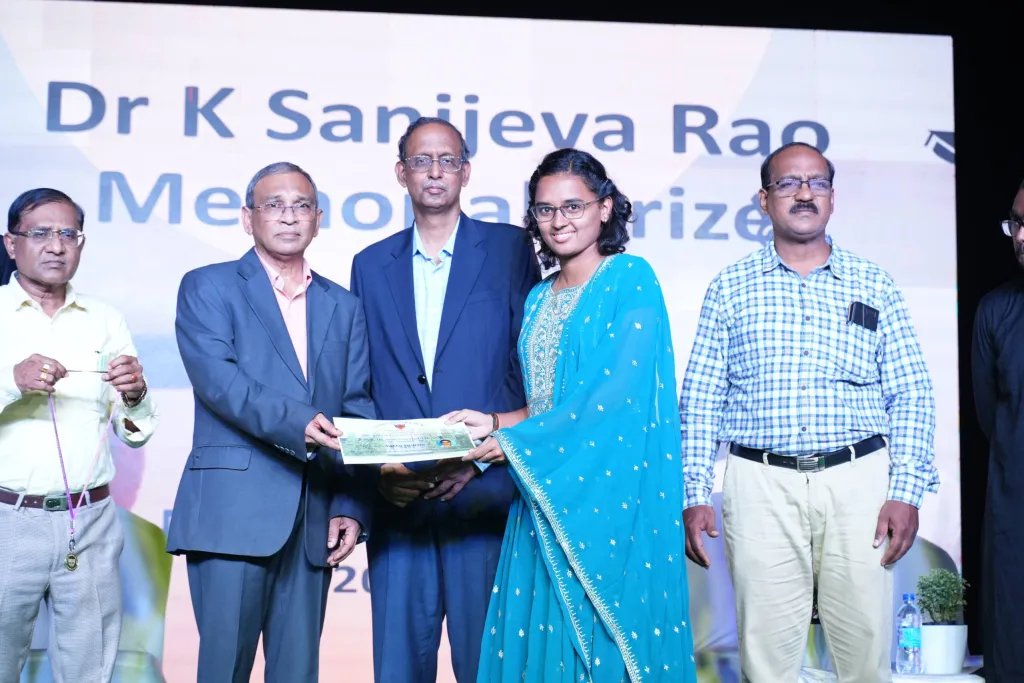
At the AMBI State Conference held at AIIMS Mangalagiri from 11–13 July 2024, postgraduate students from the Department of Biochemistry, Andhra Medical College, received recognition for their scientific presentations.
- Dr. Ramdas – First Prize in Poster Presentation.
- Dr. Sangeeta Kumari – Second Prize in Poster Presentation.
- Dr. P. Vijaya Radhika – Elected State General Secretary of AMBI.
These achievements reflect the department’s commitment to scientific learning, postgraduate research and academic excellence.
Historical achievement details reproduced from the existing department webpage.
Our Commitment
Quality Teaching • Clinical Excellence • Scientific Research • Academic Innovation
Understanding the Chemistry of Life, Advancing Medical Knowledge and Improving Healthcare.
Contact Andhra Medical College
For academic, postgraduate and institutional enquiries, please contact Andhra Medical College.
Andhra Medical College
Medical College Road,
King George Hospital Campus,
Opposite Collector Office,
Maharani Peta,
Visakhapatnam, Andhra Pradesh – 530002.
College Office: 0891 2712258
Principal’s Office: 9849903050
Email: amc_vsp@nic.in
Website: www.amc.edu.in